If you carry a folding knife you can open with one hand, you are carrying Michael Walker’s thinking around in your pocket, whether the knife cost forty dollars or forty thousand. I have collected, bought, and sold Walker’s knives for years, and most of the ones I have owned stay in my private collection. I recently wrote a full profile of him for Blade Magazine, A Jeweler’s Eye: Michael Walker Re-Engineers the Knife World, and this page is the shorter version of why he matters, along with a dealer’s view of collecting his work.
From the Jewelry Bench to the Knife Shop
Walker did not come up through the knife world. He was a sculptor and jewelry maker in Taos, New Mexico, and the story goes that his wife handed him a copy of Blade Magazine and a Gerber knife, and something clicked. He began making knives on New Year’s Day of 1980, and the jeweler’s eye came with him. His influences run through Charles Loloma’s jewelry, Frank Lloyd Wright, and Art Deco, and you can see all three in his work: clean geometry, precise fit, and nothing on the knife that does not belong there.
The LinerLock Changed Everything
Around 1981, Walker worked out the mechanism that made his name. A springy liner inside the handle snaps sideways behind the blade tang when the knife opens, locking it, and your thumb pushes it aside to close. That is the whole trick, and it means the knife opens and closes with one hand.
He first made the lock from hardened 440C steel, moved to titanium springs around 1984, and refined the detent that holds the blade closed with a press-fitted pin, which runs smoother than the ball detents most makers use. He trademarked the name LinerLock, which is why the generic copies on factory knives are properly called liner locks. And they are everywhere: Spyderco, Buck, Cold Steel, Leatherman, Microtech, and Victorinox have all built on the concept. Very few custom makers can claim an invention that reshaped the entire production knife industry. Walker can.
He Did Not Stop There
The LinerLock would have been enough for most careers. Walker kept going. His Zipper blade fuses two different metals into one blade, a hard cutting edge mated to a tough spine, joined by TIG welding or wire EDM. His BladeLOCK makes the thumb stud itself the locking mechanism, so the blade locks open and closed. Add the Crowbar Lock, a ball bearing lock, the Toughlock, and the Lake and Walker Knife Safety developed with Ron Lake, and you have a patent list that reads like a locking-mechanism textbook written by one man.
Collecting Michael Walker Knives
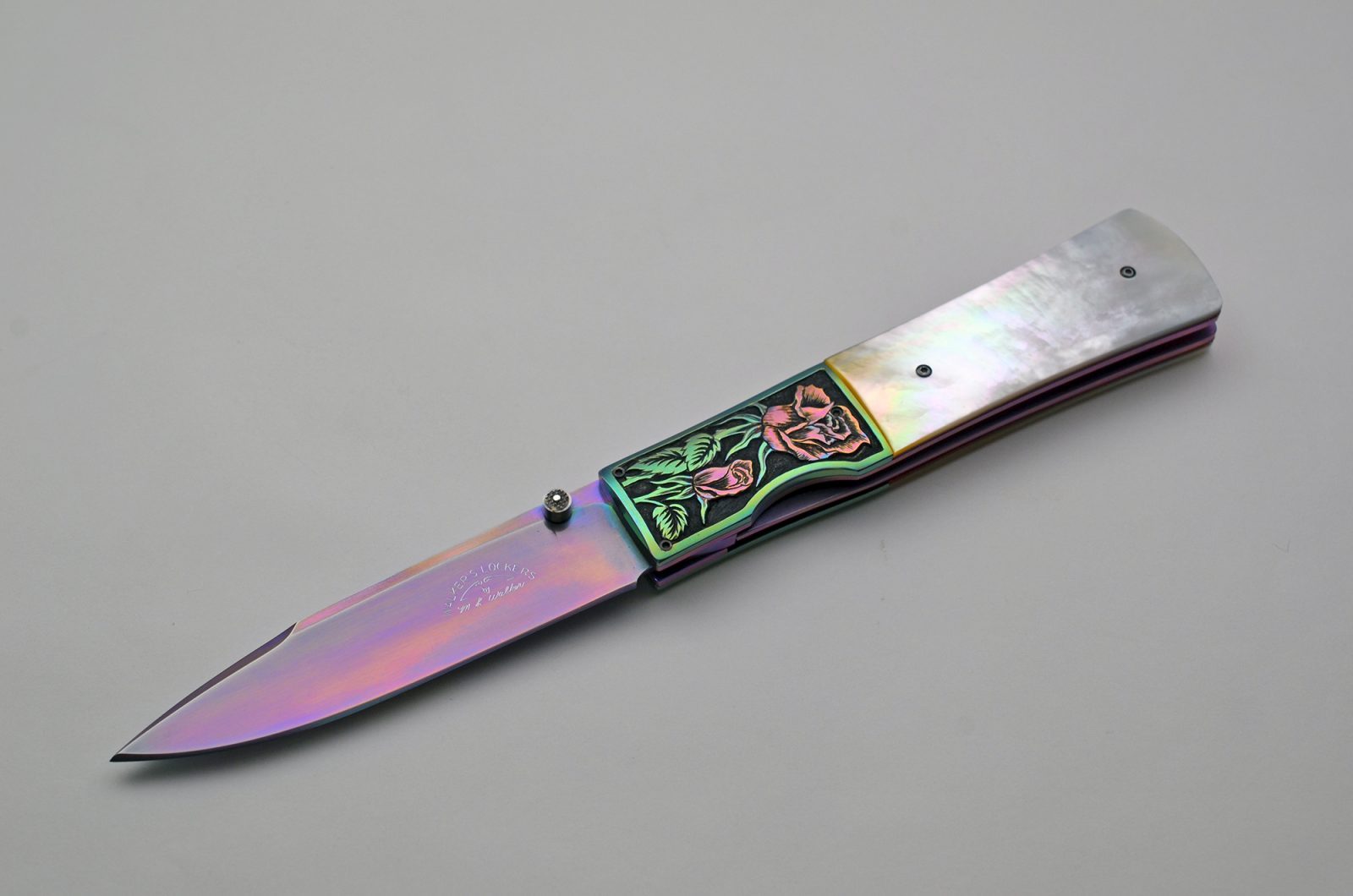
Here is the dealer’s view. Early Walker folders bring $3,000 and up when they surface. His blade locks run to roughly $20,000. And the Zipper blades have been one of the quiet success stories in the whole custom market: pieces that sold new around $12,000 have traded above $100,000. That kind of appreciation happens when a maker offers the combination collectors prize most, genuine mechanical innovation and genuine artistry in the same object, from a shop that never produced very many knives.
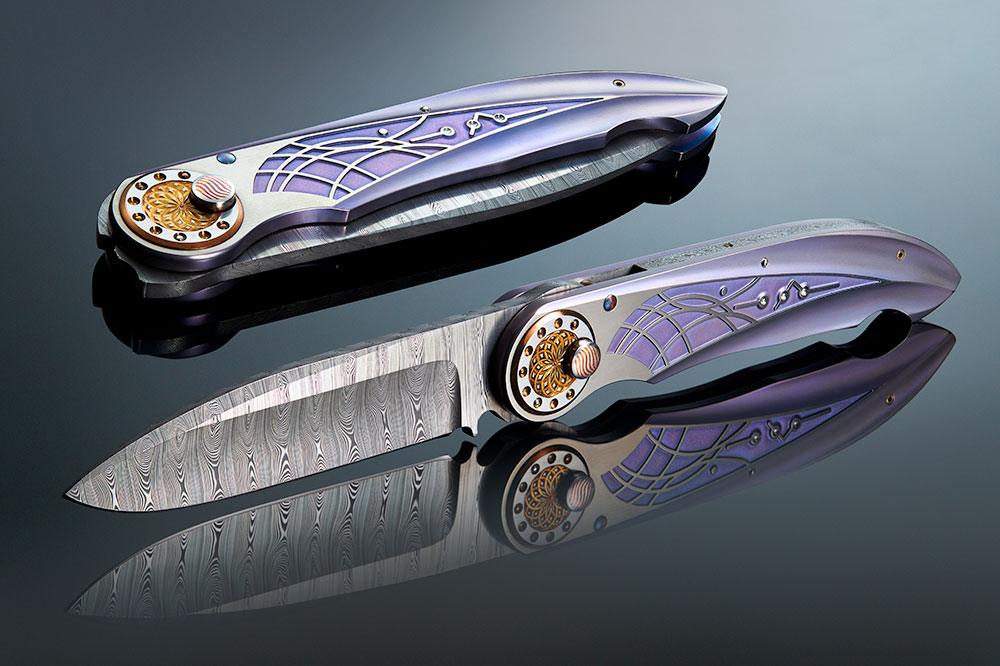
I have handled and sold Walkers through this site, including a Bladelock folder with a twist-pattern Damasteel blade, dovetailed handle, and Damascus bolsters. They do not stay listed long. If a Walker is on your want list, tell me what you are hunting for, and the fastest way to hear when one lands is the email signup at the bottom of any page.
Where to Go From Here
The full Blade Magazine profile linked above goes deeper on his methods and career. I also put together a short video on Walker as the father of the modern liner locking folder on our YouTube channel. For background on how folders got here, read how folding knives evolved from slip joints to locking knives, and you can browse the folding knives currently for sale in the collection.
Questions about a Walker, or about custom folders in general? Contact us at exquisiteknives@gmail.com or (760) 945-7177.
Featured photo by Rob Andrew Photography.
March 6, 2017