You do not have to be a professional cook to appreciate a good chef’s knife. Anyone who cooks at home knows the difference the right knife makes: dicing, slicing, and chopping become precise and comfortable instead of a chore. Choosing one is also a personal decision. A knife whose fit and weight suit one cook perfectly can be completely wrong for another.
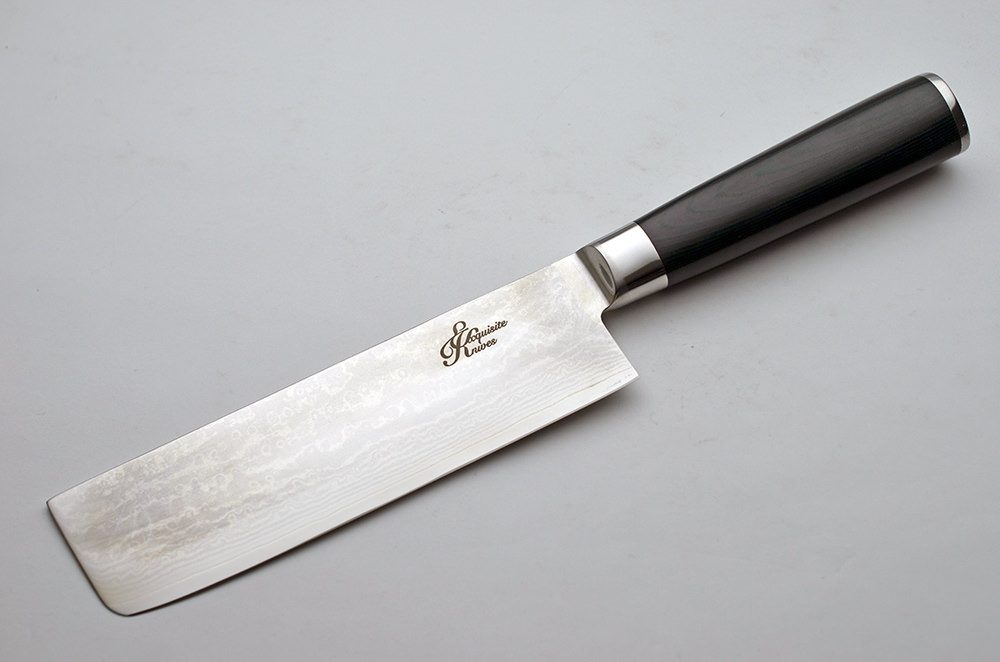
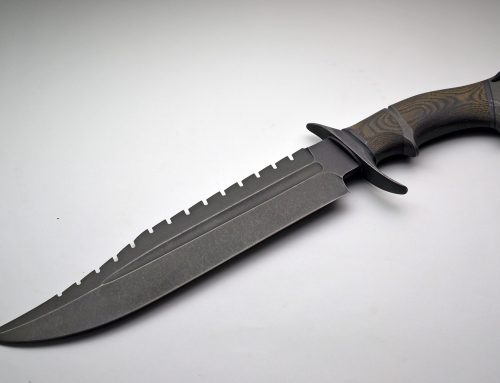
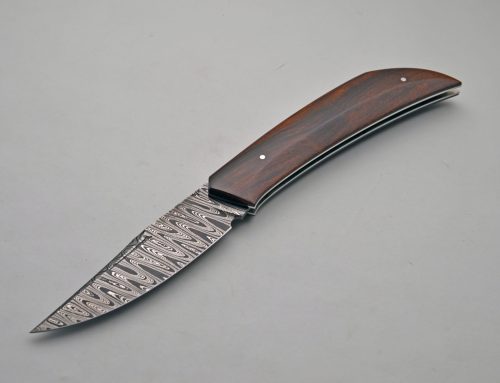
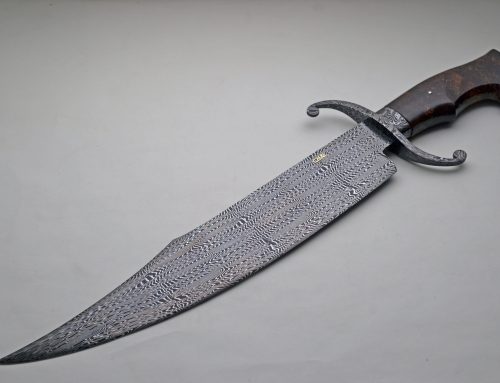
I spend most of my time with collectible knives worth thousands of dollars, but I also carry a line of working kitchen knives, and I use one of them in my own kitchen. Here is how I tell people to choose, and it comes down to three things: the steel, the handle, and the weight.
The Steel
This is the most important factor and the most overlooked one. The knife block sets in big box stores are usually a soft steel alloy that will not take or hold a fine edge. A proper chef’s knife uses better steel, and you have choices.
Traditional German blades are ground thicker and hold up to harder use. Japanese style blades are ground thinner, which trades some durability for precision slicing. And then there is the style I favor: san-mai construction, where a hard steel cutting core is clad between layers of tougher steel. You get a fine, hard edge and a blade that forgives daily use. Several of the kitchen knives in my collection are san-mai with Damascus cladding, which also happens to make them beautiful.
Whatever steel you choose, a thin grind matters more than most buyers realize. A chef’s knife ground thin behind the edge slices instead of wedging. That is also why you should never use one to chop through bones; that work belongs to a cleaver.
The Handle
When it comes to handles, fit is everything. A wide or thick handle will fight a smaller hand, and a slim handle disappears in a large one. The handle controls your grip and your accuracy, and an ill fitting one causes discomfort and sloppy cuts long before you notice why.
There is no substitute for holding the knife. If you can, handle a knife before you buy it. Knife shows are ideal for this, and you can see where I will be showing next on my show schedule.
The Weight
Everyone thinks they want a lightweight knife. What you actually want is a balanced one. Pay attention to how the weight sits between blade and handle rather than the number on a scale. A good rule: the longer the blade, the lighter the handle should feel, so the knife pivots naturally at the grip.
Take Care of It
Whatever you buy, a good chef’s knife earns decades of service if you treat it properly: hand wash, dry immediately, and keep the edge maintained. I cover all of that in my knife care guide.
Choosing a chef’s knife is simple when you weigh those three things honestly. If you would like help picking one, contact us and I will point you in the right direction.
August 5, 2015